Japanese Resume Guide 2026: Rirekisho vs Shokumu Keirekisho
The two documents behind a Japanese resume, what goes on the MHLW 2021 format, and how to write evidence lines that screeners can check.
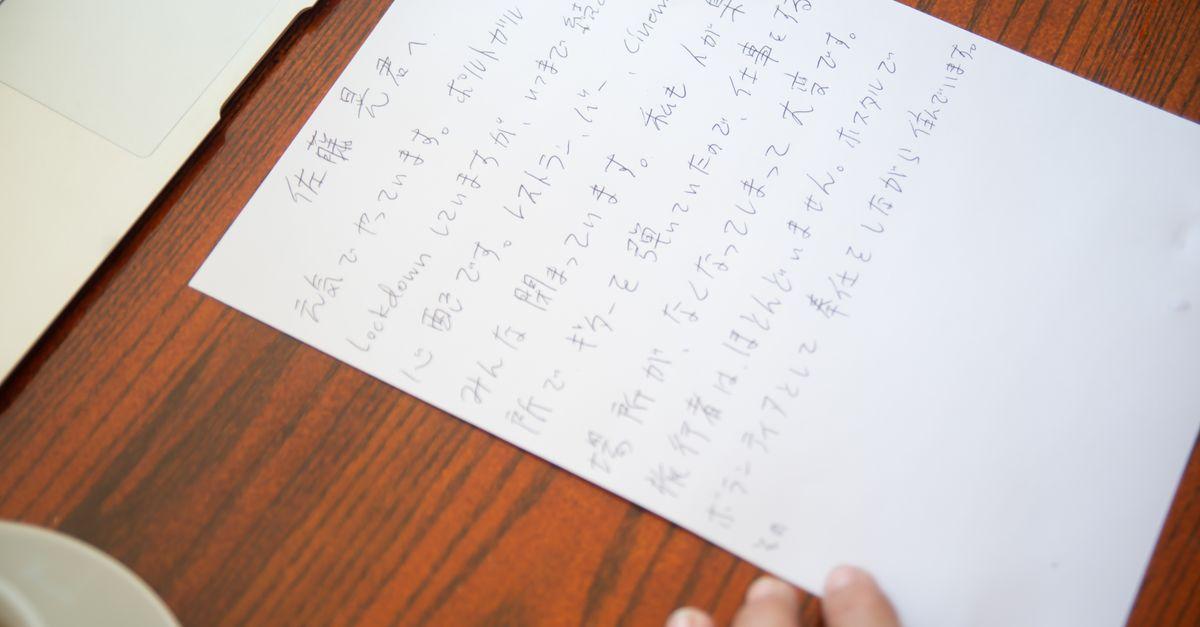
By the SkillRoute Editorial Team · Last updated October 16, 2026
These guides are for educational purposes and do not constitute legal or immigration advice.
- A Japanese resume is usually two documents. The rirekisho (履歴書) is a set form; the shokumu keirekisho (職務経歴書) is a free-form work history.
- Japan's labour ministry (MHLW) put out a sample rirekisho form in April 2021. Gender is optional on it.
- Put your evidence in the shokumu keirekisho: projects, dates, team size and results with numbers.
- List language scores such as JLPT N2 or BJT with the date you passed, in the qualifications section.
Foreign applicants often send one translated English CV and wonder why nothing comes back. A Japanese resume is two documents with two different jobs, and most of the persuading happens in the one people skip.
This guide explains both documents, using the MHLW's own format and Hello Work's guidance, checked on 16 October 2026.
What is a Japanese resume made of?
A Japanese resume is a rirekisho plus a shokumu keirekisho. The rirekisho records who you are and your history; the shokumu keirekisho shows what you actually did at work.
| Document | Format | What it is for |
|---|---|---|
| Rirekisho (履歴書) | Fixed form. The MHLW recommends its April 2021 format. | Identity, education, work history, licences and qualifications, motivation. Checked, not read for persuasion. |
| Shokumu keirekisho (職務経歴書) | Free format, commonly 1–2 A4 pages | Your actual work: projects, responsibilities and results |
職務経歴書は、履歴書では書ききれない具体的なキャリアやあなたのやる気をアピールするためのものです。(The shokumu keirekisho is for showing the specific career and motivation that a rirekisho cannot hold.)
What goes on the MHLW rirekisho format?
The MHLW form has set boxes: your name and its reading, birth date, address, school and work history, licences, your reasons for applying, and a box for requests.
The MHLW's 2021 document explains why it exists. In 2020, the Japanese Standards Association (JIS) dropped its sample resume after a request to rethink the gender box. So the ministry made its own.
- Gender changed from a male/female choice to a free field. You can leave it blank.
- The fields for spouse, number of dependants, duty to support a spouse and commute time were removed.
- The photo box applies only when a photo is needed.
- The request box (本人希望記入欄) is for wishes about salary, job type, hours or location.
However, the form is only a guide. The MHLW states it has no legal force, so each company decides which form to use.
法的拘束力はない。そのため、当該様式の使用は個別の企業が判断可能。(It has no legal force, so each company can decide whether to use the format.)
How do you write a shokumu keirekisho that gets read?
Write it like a project log. For each job, give the dates, the firm and team size, what you ran, and what changed because of your work.
Hello Work says the shokumu keirekisho holds the career detail a rirekisho has no room for. In practice, it is the step in the screening process where a reader decides whether your experience matches the role.
The pairs below are illustrative, not from real applicants. The left column is what screeners see every day; the right column is what they can actually check.
| Vague claim | Evidence line |
|---|---|
| Strong leadership skills | Led a team of 4 developers through a payments migration, March to September 2024, with no downtime |
| Excellent communicator | Wrote the English and Vietnamese onboarding guides used by 120 new support staff |
| Proficient in Japanese | JLPT N2 (July 2025); handled Japanese client email for 2 accounts |
| Data-driven marketer | Cut cost per lead from $41 to $27 over two quarters by moving budget from display to search |
| Good with automation | Built an invoice-matching script that saved the finance team about 6 hours a week |
Each evidence line has the same parts: an action, a scale, a date and a result someone could check. None needs an adjective.
How should you list Japanese language ability?
List each test by name, level and date in the licences box, for example JLPT N2 (July 2025). A level with no date leaves the reader guessing.
Language scores matter for the visa as well as the hire, as our Japan work visa guide explains.
Since 15 April 2026, the ISA asks for CEFR B2 proof, such as JLPT N2 or BJT 400+, in one case: a small firm hiring you mainly for language work on the Engineer/Specialist in Humanities visa.
Employers ask for Japanese too. JETRO's February 2026 survey found that firms most often hire skilled foreigners for their language range. Over 70% of those firms wanted business-advanced Japanese or better.
Which Japanese resume mistakes cost foreign applicants interviews?
The costly mistakes are about structure, not grammar. Sending only one document, translating an English CV word for word, and listing duties instead of results all hide what you can do.
- Sending a single CV when the posting asks for both a rirekisho and a shokumu keirekisho.
- Translating an English CV line by line, which loses the project-log structure screeners expect.
- Listing tasks ("ran marketing") instead of results with numbers and dates.
- Giving a language level with no test name or date.
- Leaving gaps in your school or work history with no reason given.
How can you check your resume against a real Japanese job?
Put the job post next to your shokumu keirekisho. For each need in the post, find the one line of your record that proves it. Mark the ones with no proof.
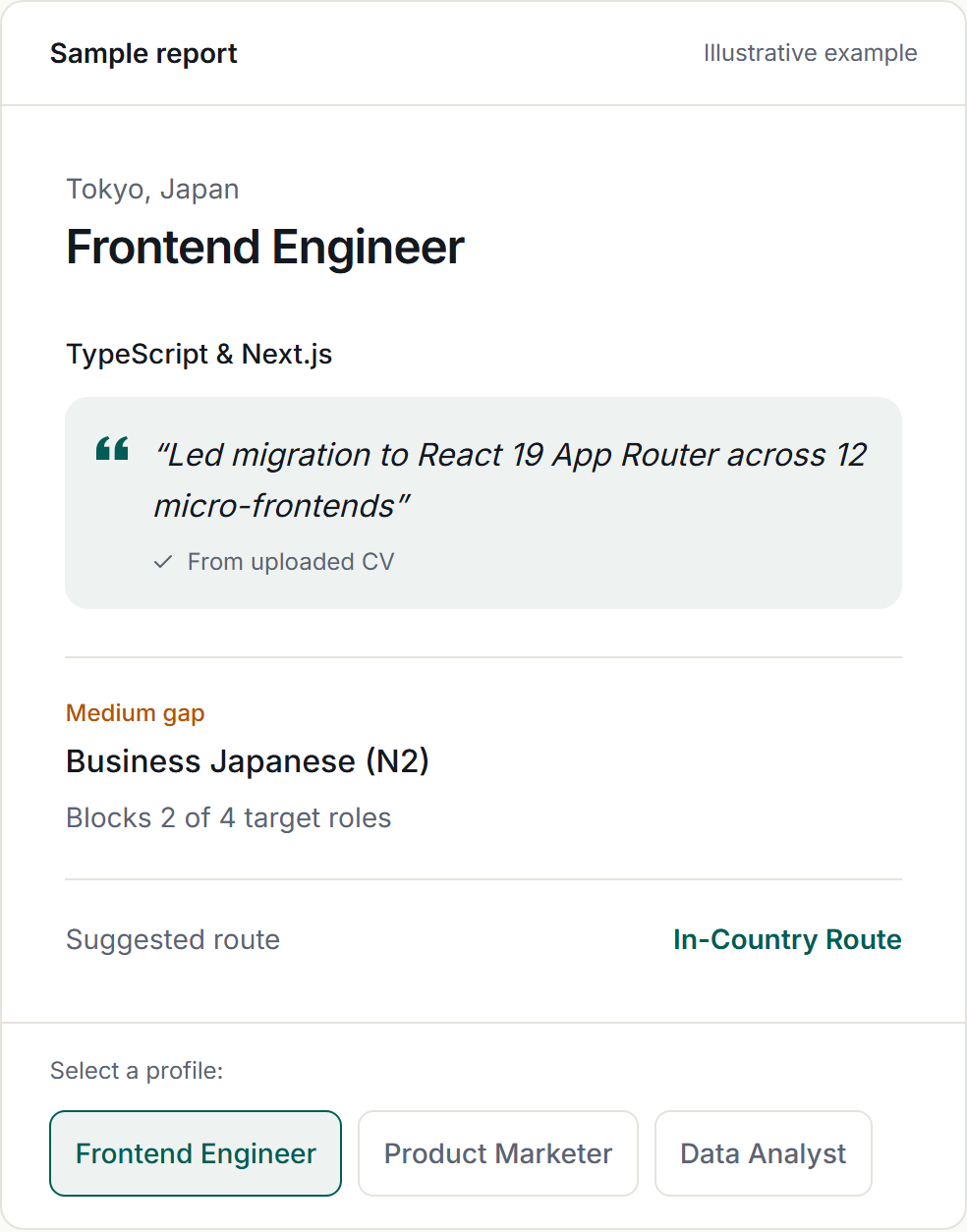
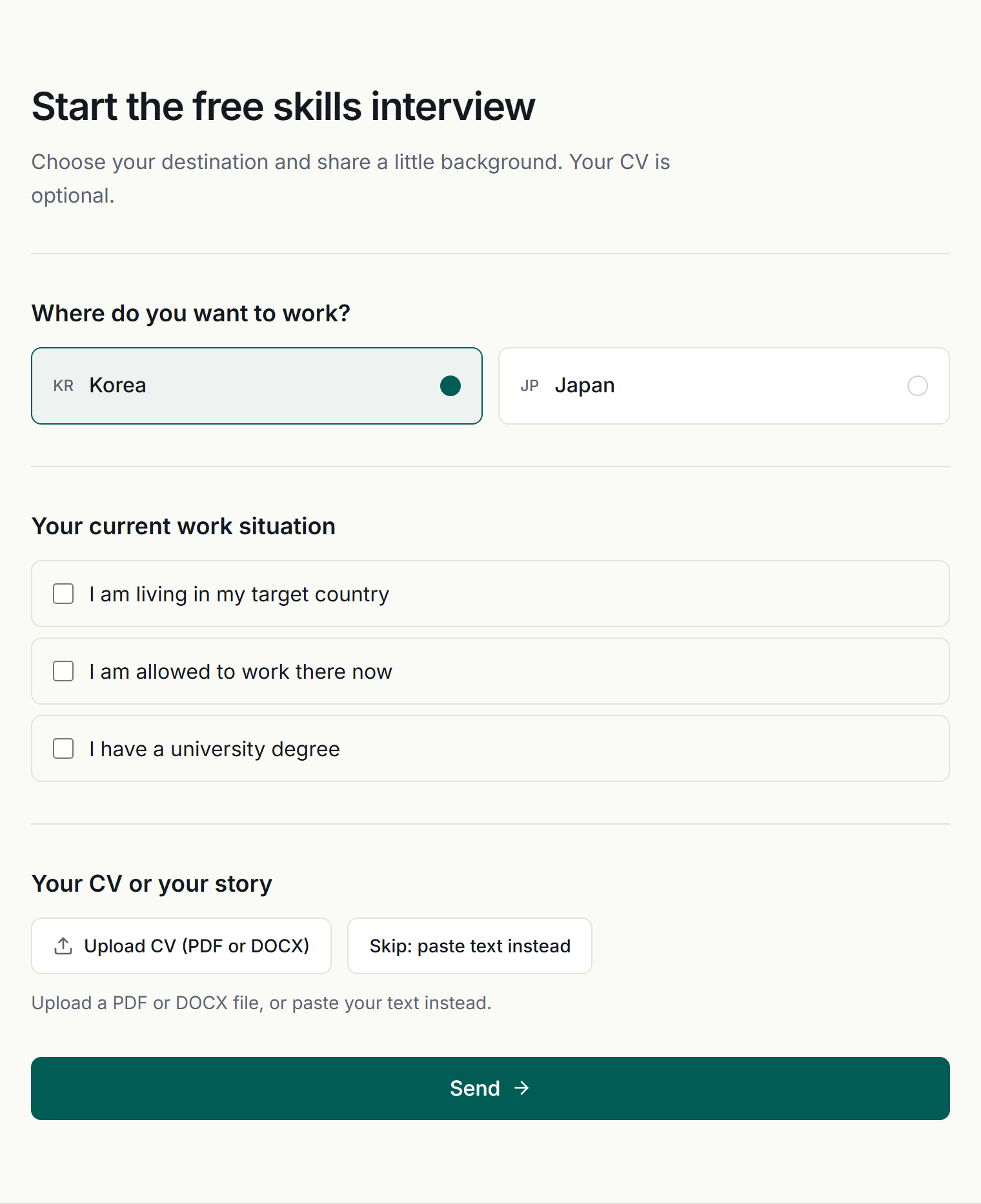
The marked rows are exactly what a screener will notice. The free SkillRoute interview runs this check for you: it quotes the lines of your CV that prove each skill, word for word, and lists the gaps between you and roles in Japan or Korea.
Frequently Asked Questions
What is the difference between a rirekisho and a shokumu keirekisho?
The rirekisho is a set form for your name, schooling, job history and licences. The shokumu keirekisho is a free-form page that shows your real work, projects and results.
Where can I get an official Japanese resume template?
The MHLW put out a sample rirekisho form in April 2021, and Hello Work shows how to fill it in. Firms can still ask for their own form.
Do I have to state my gender on a Japanese resume?
Not on the MHLW format. The gender field is optional there and can be left blank.
Do I need a photo on a Japanese resume?
The MHLW format includes a photo box for cases where a photo is needed. Follow the employer's instructions.
How long should a shokumu keirekisho be?
Often 1 to 2 A4 pages. Lead with the projects that fit the job best, and give each a date, a scale and a result.
What does CV mean in Japanese job applications?
Recruiters often say CV for both papers. If a posting asks for a CV, check whether it means a rirekisho, a shokumu keirekisho or an English resume.
Related Articles
Map your skills and gaps
Before applying to roles in Korea or Japan, get a clear report of your verified skills and the exact gaps between you and the jobs you want.
Start freeSources
Official pages this guide was checked against on October 16, 2026. Rules change, so confirm on the official page before you apply.
- MHLW: creation of the recommended resume format (履歴書の様式例), April 2021 (PDF)
- MHLW: fair recruitment, specific selection methods (公正な採用選考)
- Hello Work (MHLW): how to write a rirekisho and a shokumu keirekisho
- ISA: CEFR B2 language rule for the Engineer/Humanities status (April 2026)
- JETRO: FY2025 survey of Japanese companies' overseas business (released 12 February 2026)